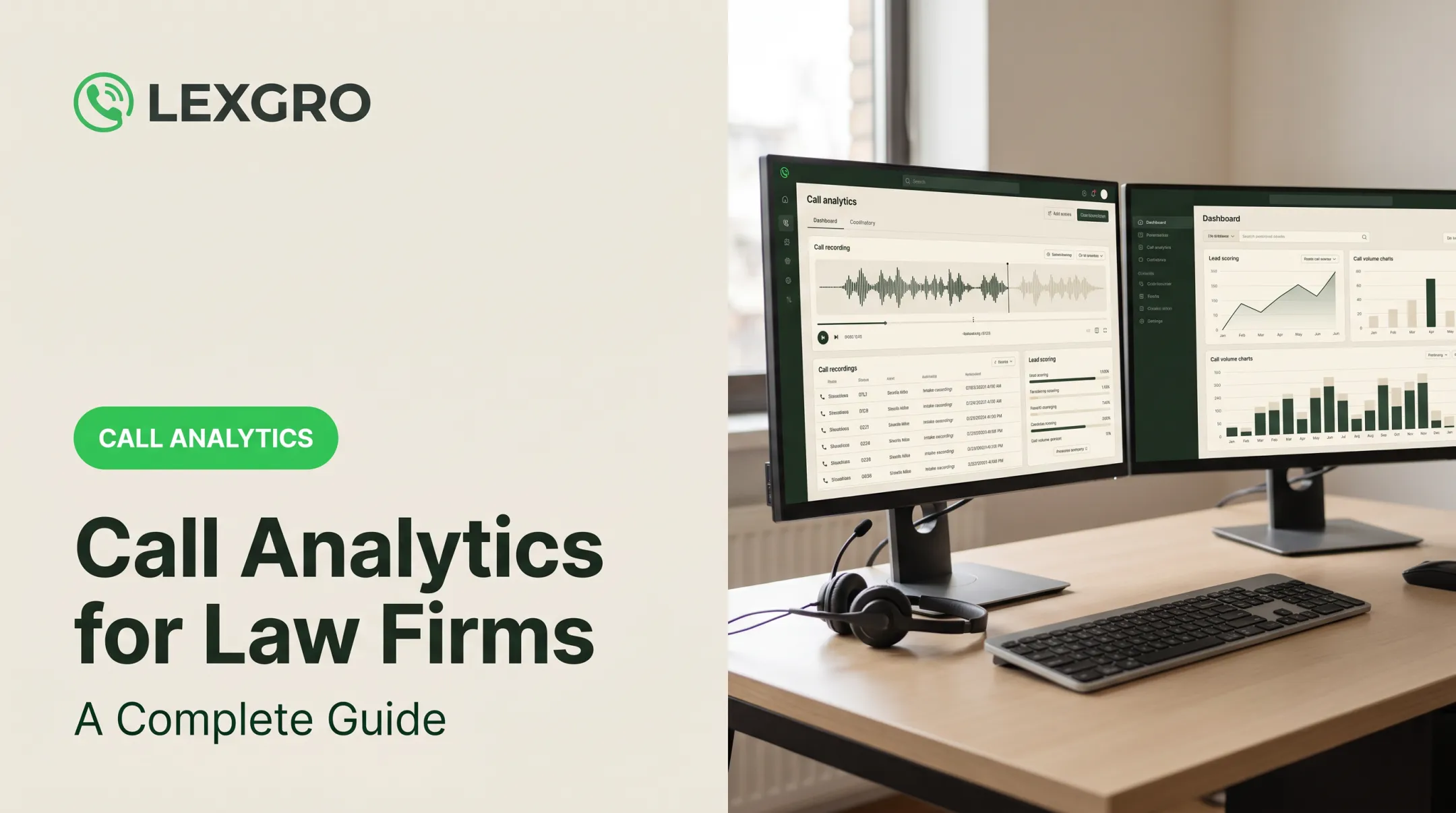
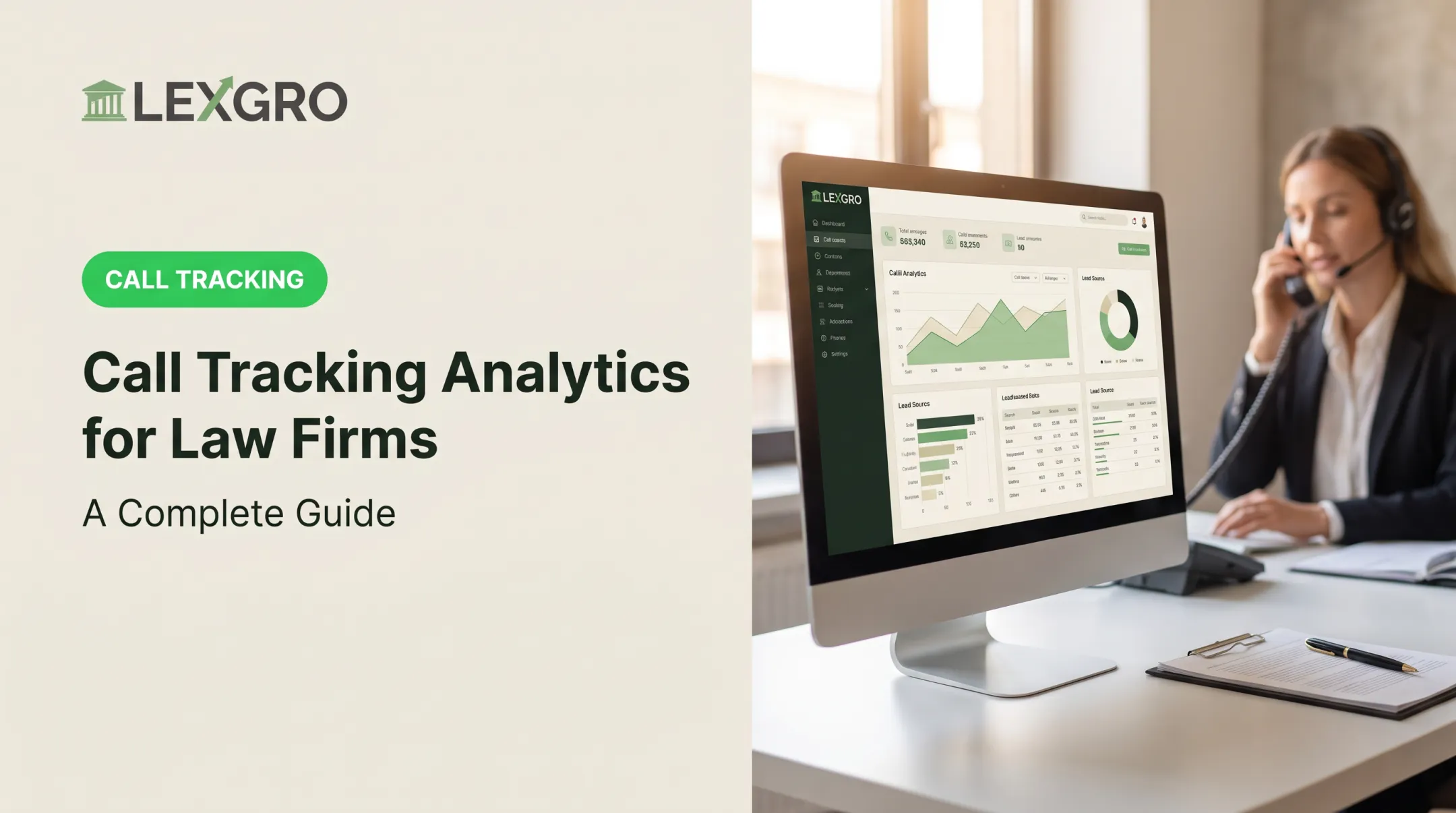
Introduction: Why Call Analytics Matters to Law Firm Marketing
Your Google Ads budget generated 40 calls last month. Your front desk answered 24 of them. You still don't know which campaigns produced the handful of calls that actually turned into signed cases.
That's the gap most law firms live in. Marketing dashboards show clicks, impressions, and form fills.
The phone conversation, where a prospective client actually decides whether to trust your firm, happens in a black box.
Missed calls make the problem worse. CallRail's 2025 analysis of more than a million business conversations found legal businesses miss 28% of inbound calls.
That missed volume is a sizable chunk of marketing spend disappearing before anyone qualifies the lead.
Call analytics closes that gap. It connects marketing activity, the call itself, and the intake outcome, so you can see which channels bring in real cases instead of just ringing phones.
This guide covers how call analytics works, how to apply it across marketing and intake, which metrics actually matter, and how to implement it without creating a compliance problem.
Key Takeaways
- Attribute each prospect call to the marketing source, campaign, keyword, or referral channel behind it
- Score qualified calls, consultations, and retained matters—not raw call volume
- Keep recording, transcription, and AI analysis behind consent, confidentiality, and access controls
- Pipe call data into intake, CRM, and reporting workflows so insight becomes action
- Measure case outcomes instead of traffic to spend marketing dollars with precision
What Is Call Analytics Marketing for Law Firms?
Call analytics turns phone calls — long the least measurable part of legal marketing — into data you can act on. It covers four jobs:
- Collecting and attributing inbound call data to campaigns, pages, and channels
- Analyzing caller intent, conversation themes, and intake quality
- Reporting which inquiries become consultations and signed matters
- Connecting call outcomes back to marketing spend and case value
Call Tracking vs. Call Analytics
Call tracking and call analytics often get mixed together. They answer different questions.
- Call tracking shows when and where a call came from: dialed number, campaign or page, and timestamp
- Call analytics shows what happened on the call: intent, themes, intake outcome, and whether it converted
Tracking logs the lead source. Analytics shows whether that lead was qualified and usable.
Phone calls deserve this extra layer of scrutiny in legal marketing because prospective clients use them differently than a web form. Someone calling a personal injury firm might ask about a filing deadline, claim eligibility, or fee structure — none of which show up in click data.
Not Every Call Is a Lead
Raw call volume is a misleading number on its own. A practice-area line can ring constantly and still produce zero signed cases if nobody filters out:
- Wrong numbers and misdials
- Existing clients calling about an open matter
- Vendor, recruiter, or cold-sales calls
- Duplicate inquiries from the same prospect
- Matters outside the firm's practice areas or jurisdiction
Once you separate noise from genuine inquiries, call data answers the questions that matter:
- Which channels bring suitable prospects
- Which ad messaging creates confusion
- Where intake drops opportunities that should convert
How Call Analytics Works Across the Legal Client Journey
A prospect sees a search result, a paid ad, a directory listing, or a billboard. They click through, land on a page, and eventually pick up the phone. Call analytics tracks that path by assigning tracking numbers tied to specific sources.
Static Numbers vs. Dynamic Number Insertion
Two approaches cover most use cases:
- Static tracking numbers: assigned to fixed sources like a billboard, a print ad, a directory listing, or a referral partner. The number itself identifies the campaign.
- Dynamic number insertion (DNI): swaps the phone number displayed on your website based on how the visitor arrived. A visitor from a paid search ad sees a different number than someone who found you organically, even though both calls forward to the same office line.
What the Platform Actually Captures
A call analytics platform can log:
- Source, campaign, and keyword
- Landing page, time, and duration
- Answer status and new vs. repeat caller
More advanced tools add recording, transcription, keyword detection, and intent or sentiment tags. Many sync directly with a CRM or intake system.
A simple example: a personal injury firm runs a paid-search campaign for "car accident lawyer [city]." A prospect clicks, lands on the practice-area page, and calls the DNI number shown there.
The platform logs the keyword and campaign, the call gets recorded, and intake marks it as a scheduled consultation. Weeks later, the CRM shows whether that consultation turned into a signed matter, tying one keyword to one real outcome rather than an estimate.

How Law Firms Use Call Analytics to Improve Marketing and Intake
Once calls are attributed and classified, the real work starts: using that data to make better decisions.
Start by comparing channels on quality, not volume. Instead of judging a campaign by total calls, track qualified-call rate, consultation-booking rate, accepted-matter rate, and cost per qualified inquiry. A channel with fewer calls but more signed cases is outperforming one that only looks busy.
Internal data from LEXGRO's LexxlyIQ platform shows why. In one tracked month, Google Ads produced 5 new cases at roughly $2,100 per case, while SEO produced 4 cases at roughly $800 per case. Connected TV assisted on 3 more as a first touchpoint. Call count alone would have missed which channel was actually efficient.
Firms put the same data to work across intake and marketing:
- Turn recurring questions about fees, eligibility, deadlines, or documents into FAQ pages and ad copy
- Flag targeting gaps, such as a workers' comp ad drawing immigration callers or out-of-state leads you can't take
- Coach intake with recordings and call grades—not just spot-check reviews—to catch missed calls, slow follow-up, and weak qualification
- Adjust staffing and routing from timestamps that show after-hours demand, language needs, and peak call windows
Clio's 2024 secret-shopper study of 500 firms found only 40% of calls were answered immediately, with 52% eventually reached after callbacks. That gap is where cases quietly disappear.
The aim is responsiveness, clarity, and respectful handling of sensitive, high-stakes conversations—not harder selling.
How to Implement Call Analytics Responsibly at a Law Firm
Call analytics only works if it's built on a clear structure, not bolted on after the fact.
Start With a Defined Intake Taxonomy
Before touching any software, agree on what each stage actually means: qualified lead, consultation, conflict-screened prospect, accepted matter, retained client, referral, and non-actionable call. Without this, your "qualified call rate" means something different to every person reporting it.
Audit What You Already Have
Review your website analytics, ad accounts, call-handling tools, CRM or case-management software, intake forms, and phone system. Identify exactly where source data or outcomes get lost between systems.

Build a Tracking and Implementation Plan
A practical checklist for rollout:
- Map channels to track — website, paid search, local listings, legal directories, referrals, offline campaigns, and individual practice-area pages
- Avoid number overload — too many tracking numbers confuse staff and callers; assign them by channel group, not by individual ad
- Configure forwarding and dynamic number insertion (DNI) — make sure every tracked number routes correctly to the right intake team
- Standardize campaign naming and source tags — so reports stay readable as campaigns multiply
- Build intake outcome fields into your CRM — so call analytics and case outcomes sync automatically
- Set up dashboards and alerts — for missed calls, unusual volume, or stalled follow-up
Address Recording and AI Safeguards Before You Flip the Switch
Recording and AI analysis introduce real legal exposure if rushed. Before enabling either:
- Confirm applicable federal and state consent rules — some states require all-party consent for recorded calls
- Review attorney-client confidentiality obligations — prospective client information is protected under Model Rule 1.18, and ABA Formal Opinion 512 covers vendor AI access and disclosure risk
- Vet vendor security practices, encryption standards, role-based access, and deletion procedures
- Build a human review process for AI-generated transcripts, summaries, or lead scores — automation should support intake decisions, not replace legal judgment or conflict checks
Most firms don't have the internal bandwidth to build this measurement infrastructure on top of day-to-day intake work. A specialized legal marketing partner can close that gap without slowing the firm down.
LEXGRO founder Keith Dyer has spent 25 years in legal marketing and worked with 100+ law firm partners. That experience helps firms put measurement in place that holds up operationally and ethically.
What to Measure and How to Turn Call Data Into Marketing Decisions
Metrics only matter when they change a budget, script, or staffing decision. Organize them in two tiers.
Foundational metrics — the operational basics:
- Calls by source
- Answered vs. missed calls
- First-time vs. repeat callers
- Call duration and after-hours volume
- Cost per call
Quality and revenue metrics — the ones that actually move the business:
| Metric | What it tells you |
|---|---|
| Qualified-call rate | Share of calls that are real, in-scope inquiries |
| Consultation-booking rate | Share of qualified calls that book a consultation |
| Accepted-matter rate | Share of consultations the firm takes on |
| Cost per qualified inquiry | Spend divided by qualified calls, not total calls |
| Cost per signed matter | True cost of acquisition per case |
Those conversion rates still depend on speed. Response time deserves its own line item: firms that respond within five minutes convert at far higher rates than slow follow-up, and roughly two-thirds of consumers say speed influenced which firm they hired. If average response time runs past two hours, fix that before you increase ad spend.

Segment without overexposing data. Break results down by practice area, campaign, keyword, landing page, and intake team member, but keep personal details out of shared reports.
Turn findings into action:
- Reallocate budget toward channels with lower cost per qualified inquiry
- Rewrite ad copy where calls reveal confusion about services offered
- Build content around recurring caller questions
- Fix coverage gaps where calls go unanswered at predictable times
- Update intake scripts where qualification is inconsistent
Review the full set monthly. Separate leading indicators (qualified calls, consultations booked) from lagging indicators (retained matters, revenue).
Leading indicators flag problems weeks before revenue confirms them. Use that lag to correct channel mix, coverage, and intake before the quarter is lost.
Conclusion: Build a Clearer Growth System Around Every Law Firm Call
Call analytics closes the gap between marketing activity and the conversations where prospective clients decide whether to trust your firm. The sequence is straightforward:
- Attribute every call
- Classify the outcome
- Protect sensitive information
- Connect the data to intake
- Use what you learn to improve campaigns and the client experience
Firms that do this well stop guessing about which channels work and start making decisions backed by actual case outcomes.
If your current reporting stops at "calls" instead of "cases," that's worth auditing.
For firms that want guidance building a scalable measurement process, LEXGRO works with a limited number of law firm partners each year on exactly this kind of growth system.
Frequently Asked Questions
How can law firms attract more qualified calls?
Attract qualified legal prospects with clear practice-area messaging, relevant search and advertising campaigns, and prominent contact options. Pair that with accurate expectations and responsive intake, then use call analytics to see which sources actually produce suitable inquiries.
What does marketing analytics do?
Marketing analytics collects and interprets data from channels like search, advertising, websites, and calls. It shows what actually drives qualified inquiries, consultations, retained matters, and overall marketing efficiency.
What is call analytics for law firms?
Call analytics links phone calls to their marketing source, tracks conversation themes and intake outcomes, and connects all of it to client-acquisition decisions. It ties each call’s source and intake outcome to client-acquisition decisions.
Which call analytics metrics should a law firm track?
Track qualified calls, consultation bookings, accepted and retained matters, missed calls, and response time. Layer in cost per qualified inquiry and conversion rate by marketing source to see what's actually working.
Is it compliant to record prospective client calls?
It depends on applicable consent, privacy, confidentiality, and professional-responsibility requirements, which vary by state. Verify current federal and state rules, then establish clear consent, security, access, and retention procedures before recording anything.