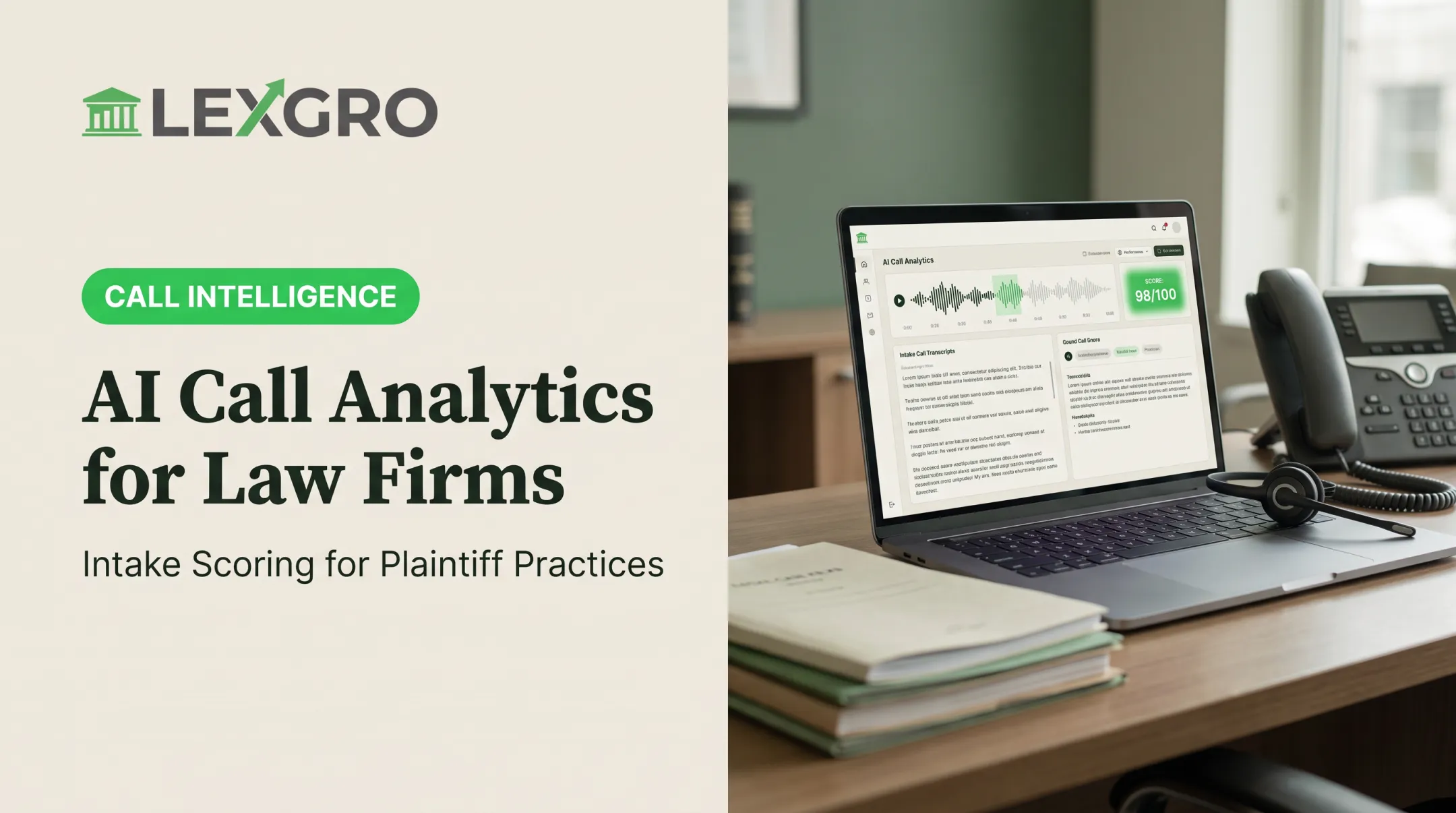
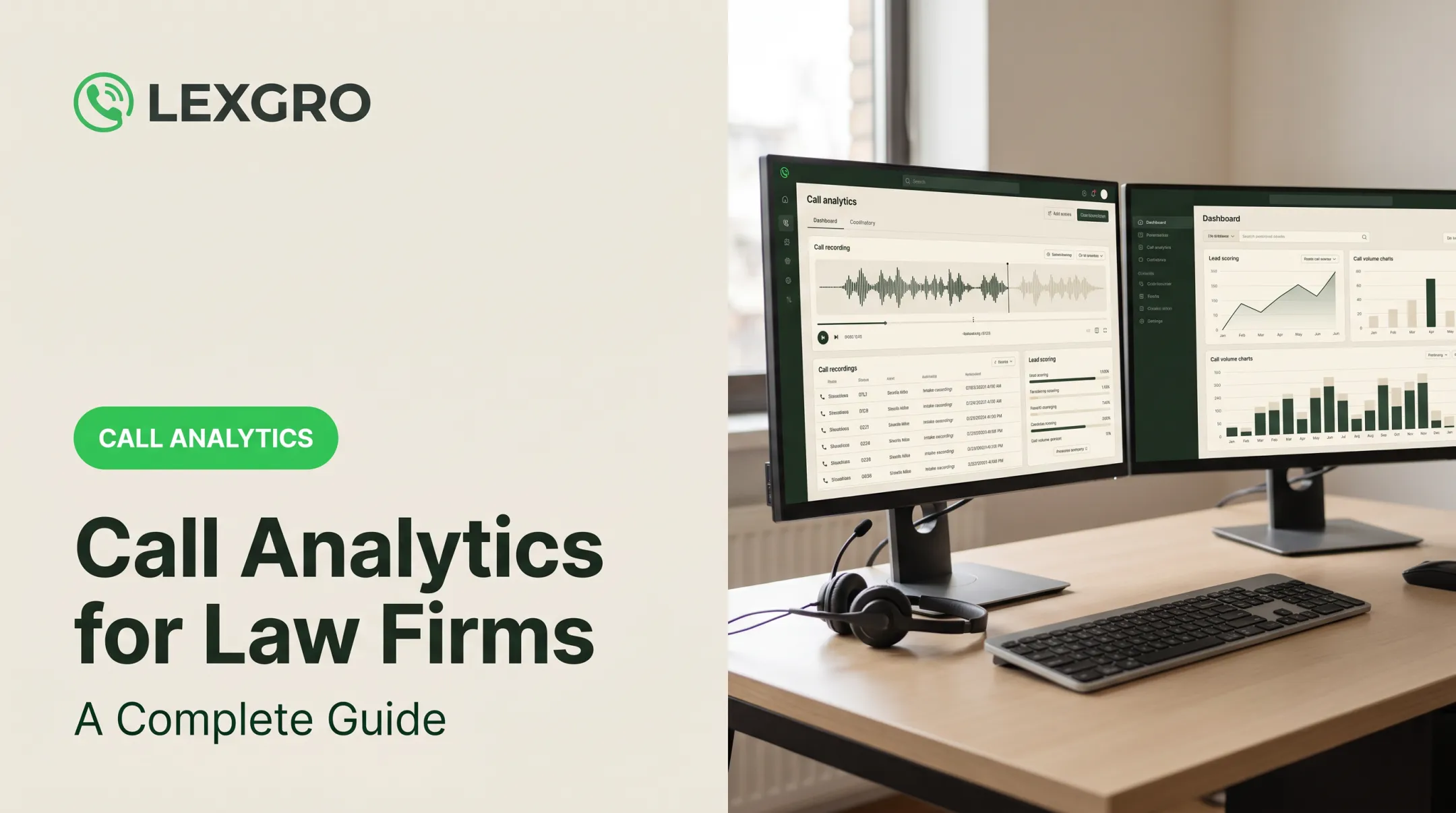
Only 40% of law firms answered Clio's test phone call during its 2024 research, and 48% never responded by phone at all, according to Clio's 2024 report. That gap between calls coming in and calls being handled well is exactly where conversation analytics earns its keep.
Conversation analytics turns recorded or transcribed intake calls into structured, searchable data: caller intent, urgency, practice-area fit, consultation readiness, and the point where staff lose momentum mid-call. Instead of guessing why bookings stall, firms can see the pattern across hundreds of calls at once.
This article covers what conversation analytics means for legal intake, how the process actually works, what an improvement cycle looks like, and where the ethical guardrails sit.
Key Takeaways
- Conversation analytics converts intake-call recordings and transcripts into searchable data on caller intent, sentiment, and outcomes
- It explains why qualified callers don't book consultations, not just how many calls come in
- Core applications include intake quality control, staff coaching, follow-up tracking, and opportunity detection
- Consent, confidentiality, and state recording laws must be addressed before any call analysis begins
What Is Conversation Analytics for Intake Calls?
Conversation analytics for intake calls means systematically examining what callers and intake staff actually say, then connecting those conversations to topics, intent, sentiment, qualification signals, and outcomes. Rather than reviewing a handful of calls each month, firms can analyze every call for consistent patterns.
Where the Data Comes From
Most firms already generate the raw material without realizing it:
- Recorded intake calls and voicemail transcripts
- Call metadata, including duration and time of day
- Web-chat handoffs and intake form submissions
- CRM notes and consultation-booking outcomes
LEXGRO's LexxlyIQ platform, for example, pulls CRM data such as case status and lead source alongside call-tracking data like answer rates and response times. Firms get one connected view instead of scattered spreadsheets.
Conversation Analytics vs. Related Terms
The terminology gets muddled quickly. Three distinctions matter:
- Sentiment analysis classifies whether a caller sounds positive, negative, or neutral. Conversation analytics goes further, linking that tone to the caller's actual issue and outcome.
- Speech analytics focuses specifically on voice recordings. Conversation analytics can also include chats, emails, and written intake notes.
- Conversation intelligence often targets sales conversations. Legal intake analytics is built around lead qualification, consultation conversion, and client care.
Why It Matters for Law Firm Intake
For law firms specifically, the payoff shows up in four places: consistency, early warning, pattern detection, and coaching.
- Consistency - confirming staff ask required qualification questions and explain next steps clearly
- Early warning - catching caller confusion, hesitation, or dissatisfaction before it costs a case
- Pattern detection - spotting trends by practice area, campaign, referral source, or call handler
- Coaching - replacing occasional spot-checks with a full picture of every call
Firms without a follow-up system after consultations lose 15% to 20% of potential cases, based on LEXGRO's internal intake research. Conversation analytics can surface those losses as a process gap, not a lead-sourcing shortfall.

How Conversation Analytics Works for Legal Intake Calls
Treat analytics as a tool that supports human review and ethical judgment, not a system that makes legal or eligibility decisions on its own. The workflow below moves from defining the question to validating the answer.
Step 1: Define the Intake Objective
Start with the business question, not the technology. Common ones:
- Why do qualified callers fail to book consultations?
- Which campaigns generate a good practice-area fit?
- Where do intake staff lose momentum mid-call?
Pick one or two supporting measures to track, such as consultation bookings, qualified-lead rate, or time to response.
Step 2: Collect and Prepare Call Data
Pull together recordings, transcripts, call metadata, intake forms, CRM outcomes, and follow-up records. Restrict access to staff who need those materials to do their jobs.
Recording consent rules vary by state. Texas is a one-party-consent state, while California and Washington generally require consent from every participant on a covered call. Confirm the rule for every jurisdiction a firm takes calls from, not just where the office sits.
Confidentiality protections apply even to callers who never become clients. ABA Model Rule 1.18 protects information learned from a prospective client. That means intake records need the same safeguards as case files: secure storage, retention limits, and redaction of unnecessary personal details.
Step 3: Transcribe and Organize Conversations
Speech-to-text transcription handles most calls well, but accents, background noise, legal terminology, and overlapping speakers still produce errors worth spot-checking.
Once transcribed, sort calls by:
- Practice area and issue type
- Urgency and jurisdiction
- Referral source and caller stage
- Booking outcome
Step 4: Analyze Topics, Intent, and Conversation Signals
Natural language processing identifies recurring topics: accident details, family-law concerns, employment disputes, deadlines, prior counsel, fees, and requests for a consultation.
It can also flag operational signals, including:
- Readiness to hire versus lingering uncertainty
- Requests for a callback that never got logged
- Confusion about next steps
- Repeated objections or disqualifying details
Sentiment adds useful context here, catching frustration, escalation risk, or a caller who needed more reassurance. Tone is situational, though. It should inform a follow-up decision, not stand in for a judgment about a caller's credibility or case value.
Step 5: Connect Insights to Intake Metrics and Actions
Raw findings only matter once they're tied to numbers staff can act on:
| Metric | What it measures |
|---|---|
| Answer rate | Share of calls picked up live |
| Qualified-call rate | Share of callers who meet basic case criteria |
| Consultation-booking rate | Share of qualified calls that book a consultation |
| Follow-up completion | Share of promised callbacks actually made |
| Reasons for non-booking | Most common objections or drop-off points |
From there, insights feed directly into staff coaching, revised intake questions, better scripts, adjusted campaign messaging, and CRM workflow changes.
Step 6: Review, Validate, and Improve
Managers should sample transcripts regularly, check that classifications match reality, and watch for bias in how calls get tagged. Compare analytics findings against actual consultation and matter outcomes before trusting them fully.
Treat this as a cycle: analyze calls, make one controlled change, measure the result, repeat. Changing one variable at a time is the only way to know what actually worked.

Conversation Analytics Example: Improving a Law Firm's Intake Process
Consider a personal injury firm that gets a steady stream of intake calls but sees inconsistent consultation bookings. All figures here are illustrative unless noted otherwise.
The firm starts with the objective: why do qualified callers go quiet after the first call? It pulls consented recordings and matches them against lead source and follow-up records in its CRM. Staff review a sample manually before trusting the automated tags.
What the Analysis Might Reveal
- Callers repeatedly asking about fees before booking a consultation
- Intake staff skipping urgency confirmation on time-sensitive injury claims
- Vague answers about "next steps" after the call ends
- One paid campaign generating calls that don't match the firm's practice areas
LEXGRO's own intake research found that car accident cases involving under $5,000 in property damage converted at just 15%, while slip-and-fall cases with clear liability converted at 65%. The difference wasn't the practice area. It was how clearly staff assessed fit and communicated value during the call.
Validating Before Acting
Before changing anything, the firm checks that:
- A sample of flagged calls was manually reviewed for accuracy
- Confidential caller information stayed restricted to authorized staff
- No automated tag was treated as a legal or eligibility decision
Turning Insight Into Action
With validated findings in hand, the firm can:
- Revise the intake script to confirm urgency earlier
- Add a structured follow-up workflow with set callback windows
- Coach staff on explaining fees and next steps clearly
- Adjust campaign targeting for the underperforming lead source
- Track booking and follow-up rates monthly to confirm the changes worked
Published results back up the approach at scale. Invoca reports that Weitz & Luxenberg saw a 14% increase in conversion and a 28% decrease in cost per retainer after segmenting calls to specialists, according to Invoca's case study. That's a vendor-reported result for one firm, not an industry average, but it shows the direction real analysis can move the numbers.

How LEXGRO Can Help
Call data only creates value once it connects to the rest of a firm's growth system: lead sources, messaging, campaign spend, and follow-up capacity. That's the gap LEXGRO is built to close.
LEXGRO works as a fractional CMO partner for plaintiff-side and founder-led firms, interpreting what callers are actually saying in the context of visibility, lead quality, and practice-area positioning. Intake insight becomes one input into a broader marketing system, not an isolated report nobody reads.
In practice, that looks like:
- Recording and grading intake calls to show where potential cases are lost
- Coaching intake teams on qualification, empathy, and clear next-step communication
- Connecting call outcomes to lead source, campaign, and CRM data through the LexxlyIQ platform
- Reallocating marketing spend toward channels producing callers who actually book and convert
Founder Keith Dyer built this approach over 25 years in legal marketing, working with 100+ law firm partners and managing millions in marketing spend. That work has contributed to more than $75M in client revenue across his partner base.
If your firm can't yet explain why qualified callers aren't booking consultations, that's worth a closer look before spending another dollar on lead generation. LEXGRO offers a Strategy Call to walk through your current marketing and intake performance and show where the gaps sit. No pressure attached.
Conclusion
Conversation analytics gives law firms something a call log never can: a clear view of what callers actually need, where intake conversations break down, and which fixes are worth making first.
The firms that get the most from it combine reliable data with secure handling, human review, and real coaching, not just a dashboard nobody acts on. Put that into practice in three ways:
- Validate what the system flags
- Protect caller confidentiality
- Change one thing at a time
Treated this way, intake-call analysis becomes one part of a broader, systems-based approach to legal marketing. Lead generation, intake, and follow-up all get measured against the same outcome: signed cases.
Frequently Asked Questions
What is conversation analytics?
Conversation analytics uses AI and speech-to-text to turn call recordings into structured insights. For law firm intake, it surfaces caller topics, intent, sentiment, and why calls do or don't convert.
Can you give me an example of conversation analytics?
A firm might discover that callers repeatedly ask about fees before booking, or that staff forget to confirm urgency on time-sensitive matters. That pattern then informs a revised intake script and a structured follow-up workflow.
What are examples of CX tools?
Common customer experience (CX) tools include call recording and transcription, CRM and intake systems, conversation analytics, QA scorecards, and post-call feedback. Most firms combine several rather than relying on one standalone platform.