The responsiveness gap makes this worse. Mystery shopping across 500 law firms found only 40% of calls got answered live, with 52% answered or returned eventually, according to Clio's 2024 report. You can't fix what you can't see, and most firms can't see which channel generated the call that got missed.
Call attribution software solves the visibility half of that problem. It connects inbound calls to the campaigns, keywords, and landing pages that drove them, and in some cases follows the lead through consultation and signed matter. This guide compares the leading platforms for 2026, explains single-touch versus multi-touch attribution, and gives you a framework for picking the right one.
Key Takeaways
- Call attribution software links phone leads to campaigns and search terms, but the strongest platforms also track lead quality and revenue.
- Compare dynamic number insertion, recording, conversation intelligence, CRM integrations, and privacy controls before you buy.
- Multi-touch attribution shows a fuller client journey than first-touch or last-touch reporting alone, if your tracking is set up correctly.
- The right platform depends on firm size, marketing mix, intake workflow, and how mature your reporting already is.
Overview of Call Attribution Software for US Law Firms
Call tracking and call attribution aren't the same thing, even though vendors use the terms interchangeably. Call tracking identifies and records calls using unique phone numbers. Call attribution goes further, linking those calls to marketing sources, customer journeys, and ideally to lead stages or revenue.
How the Technology Works
Most platforms rely on a common set of mechanisms:
- Dynamic number insertion (DNI): Swaps a tracking number into your website automatically based on how the visitor arrived
- Campaign and keyword parameters: Tags each call with the ad, keyword, or source that generated it
- Landing-page tracking: Connects calls back to the specific page a prospect visited
- Recording and transcription: Captures the conversation for quality review and lead qualification
- CRM and intake integrations: Pushes call data into Clio, Salesforce, or your case-management system
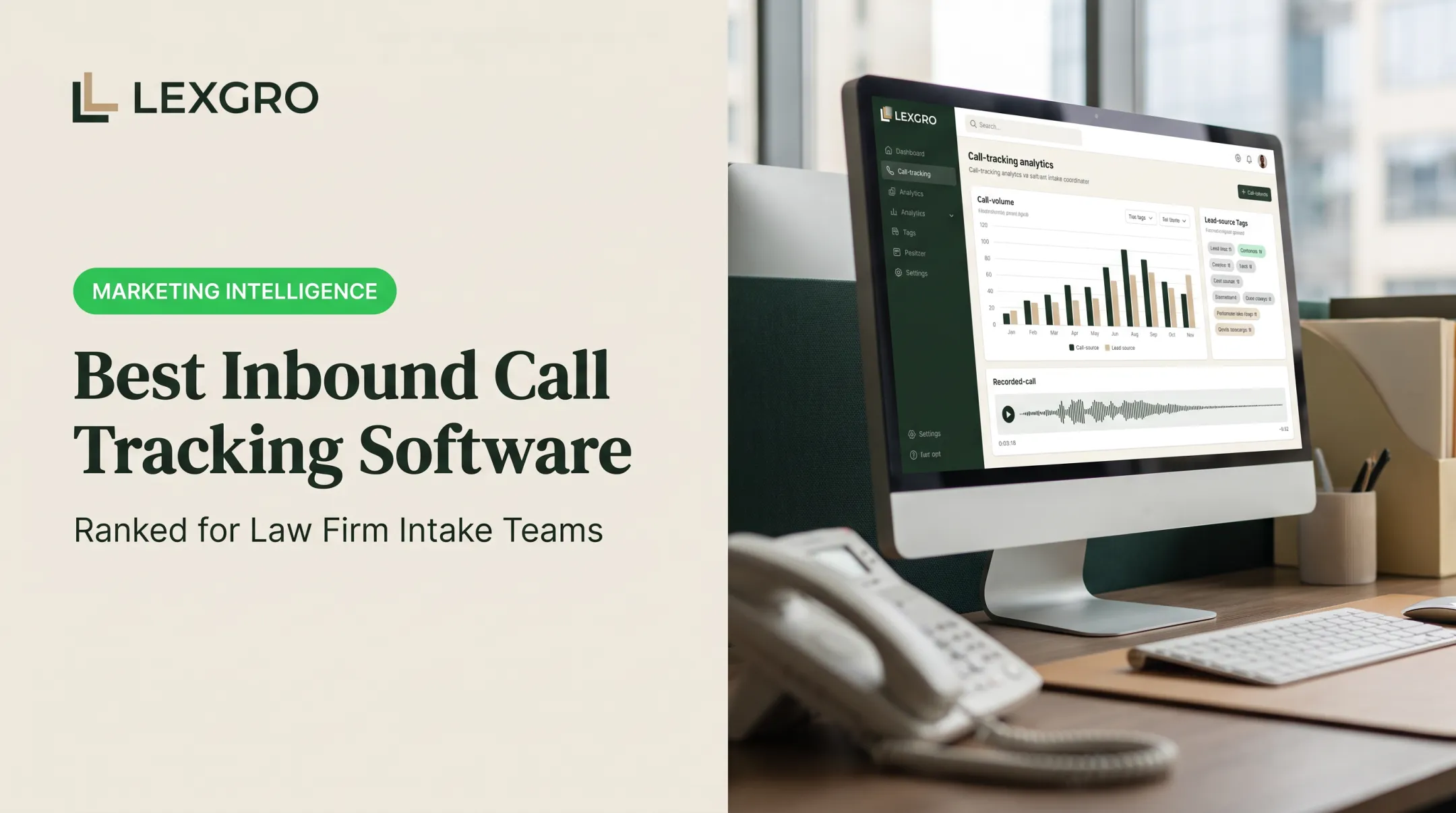
Firms using LEXGRO's LexxlyIQ platform get a version of this built directly into their reporting dashboard, with call volume, answer rates, and response times sitting alongside CRM case status and ad-spend data rather than living in a separate tool.
First-Touch, Last-Touch, and Multi-Touch Explained
| Model | What it shows | What it can miss |
|---|---|---|
| First-touch | 100% credit to the first interaction | Ignores later touchpoints that influenced the call |
| Last-touch | 100% credit to the final channel before the call | Overvalues the closing touchpoint, undervalues discovery |
| Multi-touch | Credit spread across the journey | Requires clean tracking across devices and channels to work |
LEXGRO's attribution guidance for clients typically recommends starting with last-touch reporting, since it's simple and actionable, then moving to multi-touch once tracking data is reliable enough to support it.
LexxlyIQ, LEXGRO's attribution module, applies this at the firm level by crediting CTV, SEO, and PPC touchpoints across the same customer journey. That includes view-through tracking for prospects who saw a CTV ad and searched later.
Why does any of this matter beyond reporting aesthetics? Legal industry benchmarking shows a 28% missed-call rate for law firms, according to CallRail's benchmark report. Without attribution, you can't even tell whether those missed calls were coming from your highest-performing campaign.

Top Call Attribution Software in 2026
We compared these five platforms on attribution depth, legal-marketing fit, integrations, usability, pricing transparency, and privacy controls. Vendor features and pricing change often, so treat published numbers as a starting point and confirm current details directly with each company before signing a contract.
CallRail
CallRail is one of the more accessible entry points for firms new to call tracking. It supports online and offline source tracking, automatic DNI, and five documented attribution models, including First Touch, Lead Creation, 50/50, Qualified, and W-shaped splits.
Its direct Clio Manage and Clio Grow integrations push contact records with source, medium, campaign, and keyword data automatically, which matters for firms already running intake through Clio.
| Feature | Details |
|---|---|
| Pricing | Lead Tracking $50/mo, Complete $95/mo, Lead Conversion $150/mo, Conversion Complete $195/mo plus usage |
| Attribution depth | Five fractional-credit models, including multi-touch |
| DNI | Yes, automatic |
| Conversation intelligence | Transcription included; Premium Conversation Intelligence adds sentiment analysis (plan-dependent) |
| Integrations | Clio Manage, Clio Grow (native) |
| Compliance | Verify current recording consent and disclosure settings with CallRail directly |
Best fit: Smaller to mid-size firms that want straightforward campaign reporting without a heavy implementation lift.
WhatConverts
WhatConverts tracks calls, forms, chats, and other lead sources in one unified report, which helps firms that generate leads through more than the phone. Its five attribution models (First Interaction, Last Interaction, Last Contact Interaction, Last Non-Direct Interaction, and Last Paid Interaction) focus on interaction sequencing rather than fractional credit splitting.
| Feature | Details |
|---|---|
| Pricing | Call Tracking $30/mo, Plus $60/mo, Pro $100/mo, Elite $160/mo (includes $30 usage credit) |
| Lead types | Calls, forms, chats, and other digital leads |
| Attribution models | Five interaction-based models |
| Integrations | Salesforce, HubSpot, Pipedrive, Jobber; Zapier and webhooks for broader connections |
| Compliance | Call recording controls documented; confirm consent workflow for your jurisdiction |
Best fit: Firms running multiple lead channels that need one dashboard for source, campaign, and lead status instead of juggling separate tools.
Invoca
Invoca is built for enterprise-scale programs. It offers consumer-level attribution with multi-touch data capture, DNI in its Enterprise edition, and Signal AI, which classifies calls into events like appointments, quotes, or purchases.
| Feature | Details |
|---|---|
| Pricing | Quote-based only (Pro, Enterprise, Elite tiers) |
| Attribution depth | Consumer-level, multi-touch data capture |
| DNI | Yes, Enterprise edition |
| Conversation intelligence | Signal AI call classification |
| Integrations | Salesforce, Google Ads, GA4, Microsoft Advertising |
| Compliance | Review enterprise data governance and vendor terms before onboarding |
Best fit: Larger or multi-location firms and legal networks running complex paid-media programs who can absorb a heavier implementation process and enterprise pricing.
CallTrackingMetrics
CallTrackingMetrics links calls and offline activity back to the site pages and ad sources that generated them, with call routing and workflow automation built for intake teams specifically. AskAI generates call summaries, though minutes and charges vary by plan.
| Feature | Details |
|---|---|
| Pricing | Marketing Lite $79/mo, Pro $179/mo, Sales Engage $329/mo (monthly billing); lower on annual plans; Enterprise pricing conflicts across published pages (verify current details) |
| Attribution depth | Source and visitor attribution; no named credit-allocation model confirmed |
| DNI | Yes |
| Conversation intelligence | Transcriptions, AskAI summaries |
| Integrations | Salesforce, Google Ads, Google Analytics, Slack, Zoom |
| Compliance | Confirm consent settings and access controls for your specific plan |
Best fit: Firms prioritizing call routing and intake workflow automation over granular multi-touch modeling.
Marchex
Marchex leans into conversation intelligence rather than raw call volume. It analyzes call outcomes, transcribes and translates Spanish and French calls, and applies sentiment analysis to flag lead quality beyond whether the phone simply rang.
| Feature | Details |
|---|---|
| Pricing | Not publicly displayed; request a current quote |
| Attribution depth | Multichannel journey linking with AI signals |
| DNI | Yes |
| Conversation intelligence | Call-outcome intelligence, multilingual transcription, sentiment analysis |
| Integrations | Salesforce (Marketing Edge) |
| Compliance | Verify recording consent and data handling documentation directly |
Best fit: Firms or marketing teams that care more about lead-quality signals from conversations than campaign-level credit splitting.

How We Chose the Best Call Attribution Software
A high call count or a long feature list doesn't tell you whether a platform produces trustworthy data. We evaluated each option against four practical questions.
Does the attribution actually hold up?
- Dynamic number insertion and source/keyword tracking accuracy
- Landing-page and offline campaign tracking
- Multi-touch versus first/last-touch reporting options
- Cross-device limitations and whether calls connect to lead stages or revenue
Does it fit how your firm actually works?
- Call routing, missed-call alerts, and intake tagging
- Recording and transcription controls
- CRM or case-management integrations, including conversion imports
- User permissions for partners versus marketing staff
What does it actually cost to run?
- Pricing structure, number and minute limits
- Onboarding effort and data migration
- Support quality and the technical skill needed to keep tracking accurate
Can you trust it with client data?
- Recording consent and disclosure controls
- Data retention, encryption, and role-based access
- Vendor agreements covering confidential legal communications
Before committing to any platform, run a controlled test. Pick a handful of representative campaigns, confirm the source data matches reality, and compare tracked call volume against your own intake records.
LEXGRO's attribution work with clients follows a similar pattern. Every new client is asked how they found the firm, that answer gets logged in the CRM, and the data is reviewed monthly.
Clear patterns tend to emerge within about 30 days. Firms converting fewer than 30% of consultations after this review usually have an intake problem, not just a tracking problem.

Conclusion
There's no single "best" call attribution platform. The right one matches your marketing channels, intake process, reporting maturity, and budget, and it connects leads to outcomes that actually matter, not just call counts.
When comparing finalists, weigh ongoing data accuracy, integration reliability, and privacy controls against monthly software cost. Cost per qualified or retained matter tells you far more than total call volume ever will.
If you've got the attribution data but no system turning it into predictable case growth, that's a separate problem.
LEXGRO works with a limited number of law firms each year as a fractional CMO partner, led by Keith Dyer. He brings 25 years of legal marketing experience and has worked with more than 100 law firm partners. If you want help turning attribution data into a scalable marketing system, reach out.
Frequently Asked Questions
How do you do multi-touch attribution?
Define your conversion event, capture touchpoints across paid, organic, referral, and offline channels, then pick an attribution model that fits your sales cycle. Connect calls to lead and revenue records in your CRM, and validate the data before making budget decisions.
What does "multichannel" mean?
Multichannel marketing means reaching prospective clients across several independent channels, such as search ads, organic content, email, social media, directories, and phone, rather than relying on just one.
Can you give an example of multichannel marketing for a law firm?
A prospective client clicks a paid search ad, later reads an organic blog post on your site, receives a follow-up email, and then calls a tracked number before booking a consultation. Each step gets logged as a separate touchpoint.
What's the difference between call tracking and call attribution?
Call tracking captures and manages calls using unique phone numbers. Call attribution goes further, connecting those calls to marketing sources, the customer journey, lead stages, and sometimes revenue.
Which call attribution metrics should law firms monitor?
Track qualified calls, consultation bookings, missed-call rate, lead source, cost per qualified lead, intake outcome, and retained matters. Lead-to-case conversion often ranges from 5% to 30% by practice area, so compare against your own baseline.
Is call attribution software compliant for law firms?
Compliance depends on consent and disclosure practices, access controls, retention settings, and vendor terms. Call recording laws vary by state, and interstate calls can trigger stricter rules, per Justia's 50-state survey. Get legal guidance before enabling recording features.